Chemical or Electric Propulsion: Different Jobs, Different Trade-Offs
Chemical or electric propulsion shapes a spacecraft’s maneuver schedule. Compare thrust, power, and propellant needs to see which system fits a mission.
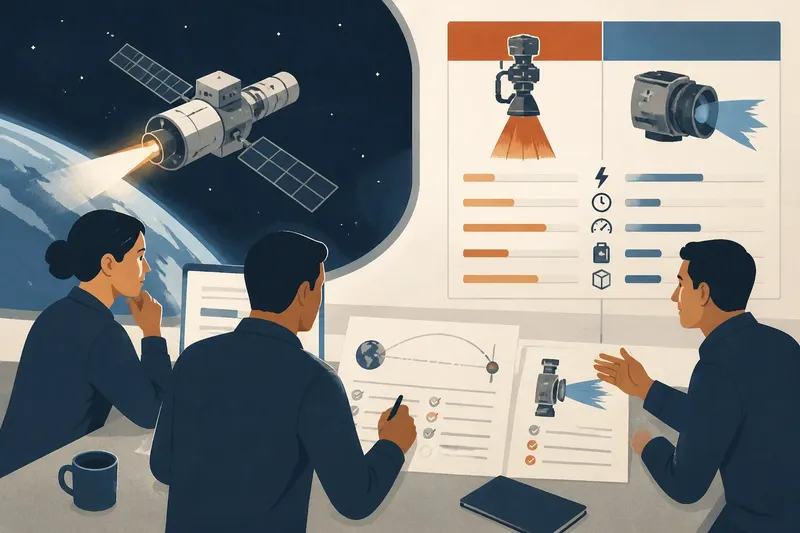
Chemical or electric propulsion shapes a spacecraft’s maneuver schedule as much as its hardware. A chemical engine can deliver a strong push during a brief burn; an electric thruster uses electrical power to accelerate propellant gradually. The choice depends on the maneuver a mission needs, the time available to perform it, and the systems the spacecraft can support.
How do chemical and electric propulsion differ?
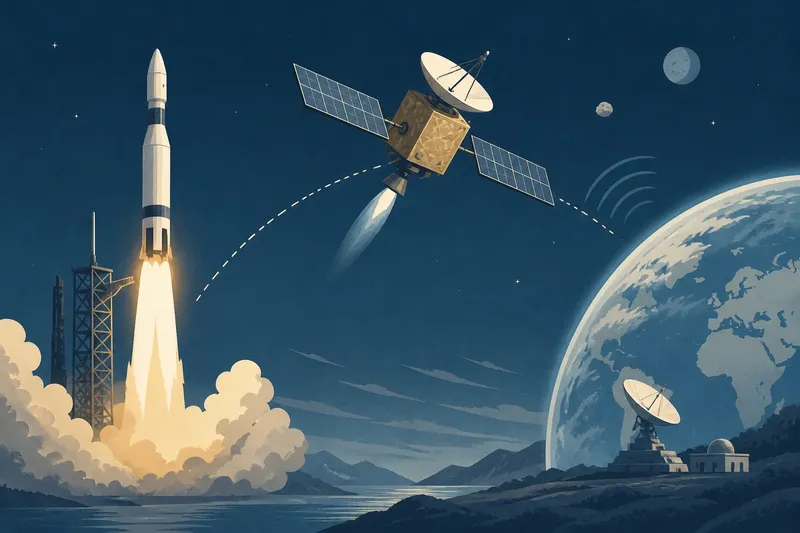
Chemical propulsion releases energy through a reaction between propellants. Hot gas exits a nozzle, pushing the spacecraft in the opposite direction. The resulting thrust can produce a substantial change in motion over a relatively short burn.
Electric propulsion uses electrical energy to accelerate propellant—often a gas such as xenon or krypton—out of a thruster. The thrust is modest, so the spacecraft builds a change in motion over extended operation. The electricity may come from solar arrays or another source, while the propellant remains a separate part of the system.
Neither description says what a whole mission can accomplish on its own. Propulsion works alongside the spacecraft’s structure, power supply, navigation, and operations plan.
What do thrust and exhaust speed tell you?
Thrust describes the force the engine applies at a given moment. It helps determine how promptly a spacecraft can carry out a maneuver. Chemical engines can provide a strong push over a short burn; electric thrusters apply a gentler force over a longer period.
Exhaust speed helps explain how propellant is used to create a change in motion. Electric thrusters can expel propellant at high speed, but they still need time and electrical power to build that change. A spacecraft cannot infer maneuver timing from propellant efficiency alone.
Keep the distinction simple: thrust concerns the push now; exhaust speed concerns how propellant leaves the engine.
When is chemical propulsion a good fit?
Chemical propulsion suits maneuvers where a strong, prompt push matters, such as launch, departure burns, orbit insertion, or a time-sensitive correction. The specific job varies by mission. A launch vehicle’s engines and a spacecraft’s onboard propulsion may both be chemical, but they do not necessarily serve the same purpose.
Chemical systems require propellant tanks, feed systems, and engines. That hardware occupies space and adds mass, and propellant used for one maneuver is no longer available for another. Mission planners may therefore reserve a chemical burn for a maneuver whose timing makes it especially useful.
Ask what the maneuver must accomplish and how soon it must happen before comparing engine types.
When does electric propulsion make sense?
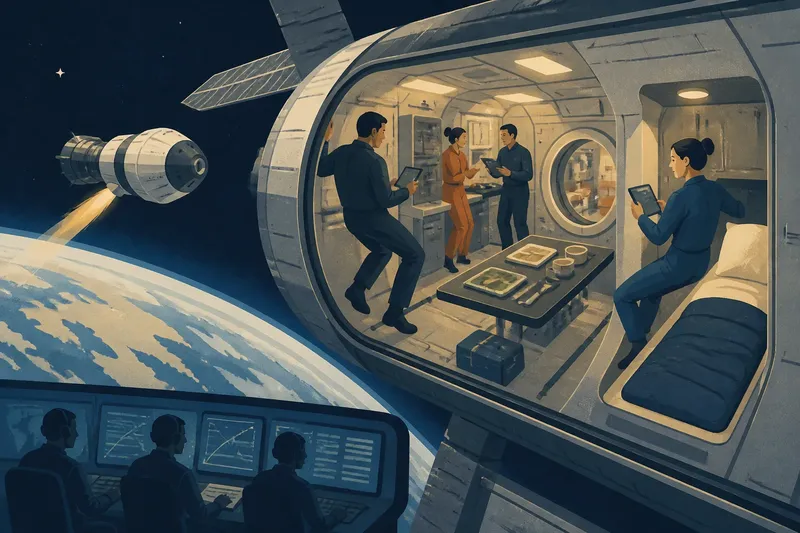
Electric propulsion can suit missions that have time to accumulate a change in motion and can supply power to the thruster. Solar electric systems rely on solar arrays; mission distance and spacecraft design affect how much power is available. Instruments, communications, thermal control, and propulsion may all draw on the spacecraft’s electrical supply.
Extended thrusting can also shape operations. The spacecraft may need to hold a particular orientation, which can limit when it observes, communicates, or performs another maneuver. The mission plan has to accommodate those periods rather than treating them as free time.
Electric propulsion still expels propellant. Its operating plan must account for both that supply and the electrical power needed to accelerate it.
How should you compare propulsion for a mission?
Start with the actual maneuver: what change in motion is required, and how soon must it be complete? Then consider whether the spacecraft can supply the needed power, spend time thrusting, and fit the maneuver around communication and science operations. Propellant capacity and the spacecraft’s design also constrain the choice.
- If the maneuver must be completed in a short window, check whether a strong brief burn fits the schedule; if it does, consider chemical propulsion, and if it does not, revise the maneuver plan or assess another approach.
- If the spacecraft has limited electrical power, check what power remains after instruments and communications are accounted for; if little is available for thrusting, consider chemical propulsion or redesign the power and operations plan.
- If the mission can accommodate extended thrusting, check whether the operating schedule leaves room for it; if it does, consider electric propulsion, and if it does not, choose a maneuver plan with a shorter operating period.
- If the route depends on solar power, check whether the solar arrays can support the planned thrusting along that route; if they cannot, consider a different power arrangement or a propulsion plan that does not rely on that supply.
- If the spacecraft has tight limits on tanks, engines, or other hardware, check the mass and space available for the propulsion system; if the system does not fit, reconsider the mission design or its propulsion option.
- If the spacecraft must communicate or observe during the proposed thrust period, check whether its orientation and schedule allow both activities; if they conflict, separate those operations or revise the thrusting plan.
Say a fictional cargo spacecraft in Earth orbit must depart for a distant destination, and its mission plan calls for a departure maneuver during a narrow scheduling window. Its designers first record that window as the fixed input, then check whether the spacecraft has electrical power available for sustained thrusting and whether its planned observations can pause. If the operating period needed for electric propulsion cannot fit before the window closes, they compare a chemical burn that can complete the maneuver within the available time. The resulting decision favors chemical propulsion for departure, while leaving electric propulsion as an option only if later cruise operations have time and power to support it. These are invented mission inputs and a conditional design choice, not a claim about an actual flight.
Some spacecraft carry both types: chemical propulsion for a prompt maneuver and electric propulsion for gradual changes during a longer cruise. That arrangement can serve distinct tasks, but it also adds hardware and operational demands. Each system needs a specific job to justify its place in the design.
What questions do readers ask about chemical or electric propulsion?
Can electric propulsion accelerate a spacecraft quickly?
Electric thrusters generally provide low thrust, so the spacecraft builds a change in motion gradually. Their use is suited to missions that can accommodate extended operation rather than a sudden push.
Can chemical engines work in space?
Yes. Chemical engines can propel spacecraft beyond Earth’s atmosphere, provided the vehicle carries the required propellants and its design supports the maneuver.
Does electric propulsion use propellant?
Yes. An electric thruster expels propellant, while electrical energy accelerates it. The power source and propellant supply have different roles.
Can a spacecraft combine chemical and electric propulsion?
Yes. A mission may assign them different tasks, such as using chemical propulsion for a prompt maneuver and electric propulsion for gradual adjustments. The added hardware and operating needs must fit the spacecraft design.
Which constraints should decide the propulsion choice?
The decision turns on the maneuver’s deadline, the spacecraft’s power supply, available time for thrusting, propellant capacity, and the effect on other operations. A chemical system can suit a schedule built around a prompt burn; electric propulsion can suit a plan with sustained operating time and sufficient power. A combined arrangement is another option when both kinds of maneuver matter.
When a mission description names chemical or electric propulsion, ask what maneuver the system performs and what constraint shaped that choice. The answer should connect the engine to a real task—such as meeting a departure window or fitting gradual thrusting around spacecraft operations—rather than treating one technology as universally superior.