Why a Spacecraft Has to Be More Than a Rocket
Learn how a spacecraft and launch vehicle divide their work, from payload delivery to the systems that keep a mission operating after separation.
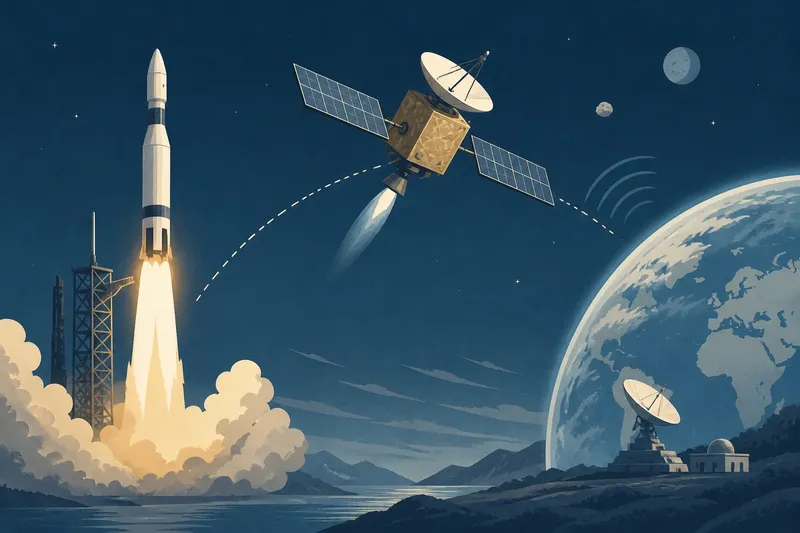
A launch vehicle can deliver a spacecraft to its intended path, but the spacecraft must do the mission’s work after separation. The distinction between a launch vehicle and spacecraft becomes clear at that handoff: one provides the ride away from Earth, while the other must operate, communicate, and pursue its purpose.
That division shapes everything from the connection between the two vehicles to the spacecraft’s power system. Calling both objects “the rocket” can obscure the decisions that determine whether a payload works once it leaves the launch pad.
What does each vehicle need to do?
A launch vehicle lifts its payload and places it on an assigned trajectory. Its engines, tanks, stages, guidance equipment, and structure are designed for ascent. A spent stage may be discarded because carrying it farther would add weight without helping with the remaining launch task.
A spacecraft is designed for what happens after deployment. It may point a telescope, support a crew, relay data, land on another body, or make a close approach. Its systems must serve those tasks in the conditions of its mission, not merely survive the ride upward.
Some vehicles combine these roles to a degree. A crewed capsule, for example, rides atop a launch vehicle and remains attached during ascent. The capsule houses and supports the crew and operates after separation; the launch vehicle delivers it. The boundary is about function, not a requirement that every component be physically separate from the start.
Ask what the vehicle must still do after the main launch burn ends. That question usually reveals which requirements belong to the spacecraft.
Why can’t the launch vehicle keep doing the mission?
Launch is a brief, demanding phase compared with the work a spacecraft may perform afterward. A launch vehicle is built to push a payload through the atmosphere and accelerate it. Mission operations may instead call for stable pointing, controlled rotation, careful timing, or a signal sent across a long distance.
Those needs can conflict. A launch vehicle’s structure must withstand ascent loads, while a scientific instrument may need a stable platform with little unwanted motion after deployment. A satellite antenna needs a useful view of Earth; a deep-space probe may need to point its antenna toward Earth at one time and its instruments toward a target at another. After separation, the spacecraft must manage these changes without the launch vehicle’s steering or power.
Separation is a design event, too. The spacecraft must be released without damaging its instruments, determine its orientation, and begin operating on its own. Depending on the mission, it may unfold solar arrays, establish communications, adjust its orbit, or wait for a planned sequence. The launch vehicle’s job can be complete before the spacecraft begins its main work.
How does the mission goal shape the spacecraft?
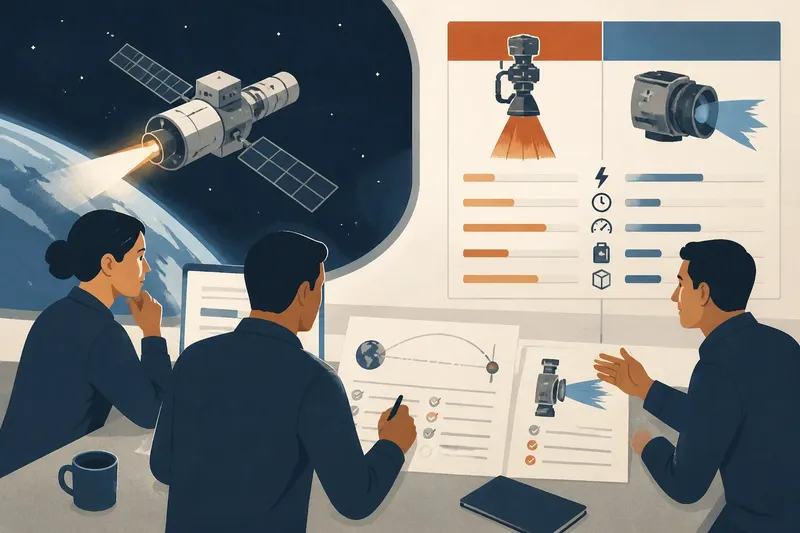
Designers start with the task and trace its consequences through the vehicle. A weather satellite needs sensors and a way to transmit observations. A crewed spacecraft needs a pressurized cabin, life-support systems, controls, and provisions for returning or transferring crew. A probe intended to pass a distant world needs instruments, navigation, communications, and a plan to collect useful observations during the encounter.
Each goal creates supporting needs. Instruments require electrical power and thermal control. Communications depend on antennas, radios, and an attitude that lets the antennas point as intended. Guidance and navigation help the spacecraft determine its position and orientation. Its structure must withstand launch loads and then support operations beyond the atmosphere.
Imagine a mission team plans to observe a planet during a brief flyby. The launch vehicle’s task is to send the probe onto a trajectory that reaches the encounter region. The probe must keep its instruments and antenna ready, point its sensors at the planet during the passage, and later transmit the collected data toward Earth. The expected result is a set of measurements received on Earth, not simply the probe’s arrival at the target.
This is why a payload is not automatically a complete spacecraft. A camera, communications package, or scientific instrument may rely on a host vehicle for power, orientation, thermal management, and data handling. The useful mission outcome depends on the combined system, even when the instrument receives most of the attention.
What changes when the spacecraft carries people?
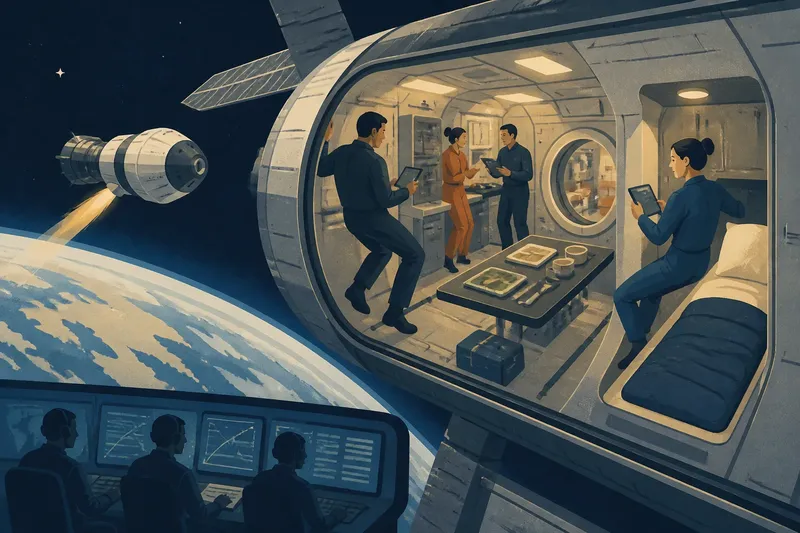
Human spaceflight adds requirements beyond getting a crew above the atmosphere. The spacecraft must provide a livable environment and support crew operations. The mission plan must account for how people enter, move through, and leave the vehicle. A launch vehicle can carry a crewed spacecraft, but the spacecraft must protect and support its occupants during the phases assigned to it.
A capsule may need a heat shield and a way to land or splash down. A vehicle designed to remain in orbit may instead need docking equipment, habitable space, and systems that work with a station or another craft. These are different mission functions, even if both spacecraft begin their flights on similar launch vehicles.
The distinction matters during an emergency. A launch escape system, when provided, addresses ascent hazards. The spacecraft’s own systems address conditions its crew faces after separation and during return. Each part must be designed for the phase it is responsible for; the name of the assembled vehicle does not tell you what protection is available at every moment.
How do launch and spacecraft decisions affect each other?
The vehicles have separate jobs, but designers cannot plan them in isolation. A launch vehicle sets limits on the payload’s mass, dimensions, attachment points, and delivery options. The spacecraft must fit those limits while retaining the capabilities its mission requires.
A payload adapter is the structure that joins the spacecraft to the launch vehicle. It must hold the spacecraft securely during ascent and release it in the planned way. If the vehicles need to exchange signals or electrical power before separation, the adapter or adjacent connectors must provide those links; afterward, the spacecraft relies on its own systems.
Launch conditions shape the spacecraft, too. Vibration, acceleration, and acoustic loads can affect how instruments are mounted and how delicate components are protected. In turn, the spacecraft’s size and arrangement affect how it can be integrated with the launch vehicle. The launch system must carry it safely, and the spacecraft must work after the ride.
Designers may have several launch options, but the choice depends on mission needs and constraints. A vehicle’s trajectory and timing can affect where the spacecraft can go and when it can arrive. If the spacecraft carries propulsion, that system serves its assigned mission purposes after deployment; it does not replace the launch vehicle’s delivery role.
Check how the spacecraft attaches, separates, and receives any needed pre-release connections. A capable payload cannot compensate for an incompatible ride.
What questions clarify the difference?
Is a rocket the same thing as a launch vehicle?
“Rocket” commonly refers to a vehicle that uses rocket propulsion, while “launch vehicle” emphasizes its role in delivering a payload. The terms often overlap in everyday speech, but neither implies that the vehicle can perform the payload’s mission after deployment.
Can a spacecraft be part of a rocket?
Yes. A spacecraft can sit atop a launch vehicle, ride inside a protective fairing, or remain attached during ascent. Its identity comes from the work it is built to do, not from whether it is physically joined to the rocket during launch.
Does every spacecraft need its own engine?
No. Some spacecraft rely on the launch vehicle to reach their intended orbit or trajectory and use other systems for their mission. Others carry propulsion for tasks such as changing orbit or adjusting their path; the mission determines what is needed.
When does the launch vehicle’s job end?
Its delivery role ends when it completes the assigned launch and payload deployment. The spacecraft may still need to separate, establish its operating state, and begin its mission sequence before it can produce the intended result.
How can you read a mission description?
Separate the vehicle names from the task being promised. Ask what the launch vehicle delivers, what the spacecraft does after release, and what observable outcome would count as mission progress. A statement that a probe has launched describes an important event, but not necessarily its arrival, data collection, or successful communication.
Then look for the spacecraft’s role: its destination, operating environment, instruments or crew functions, and means of communicating or returning. These details explain why a mission needs more than a rocket without diminishing the difficulty of launch.
The distinction between a launch vehicle and spacecraft is more than vocabulary. It lets you follow the chain from departure to useful work: the launch vehicle creates the opportunity to go, and the spacecraft is built to make something of it.
For a clear first read, follow the handoff: identify what the rocket delivers, then ask what the spacecraft must do once it is on its own.